 Legal.ge
Loading account
Legal.ge
Liana Zagashvili is a lawyer from Georgia who completed her bachelor's degree at Ilia State University in 2020. In 2022, she was awarded a master's degree from Sulkhan-Saba Orbeliani University, where she continued her doctoral studies starting in 2023. Her experience combines knowledge gained from both the private and public sectors. She is employed as a Data Protection Officer and, since 2020, has held the position of an expert in the accreditation and authorization of higher education institutions. Her research field is artificial intelligence and the protection of copyright within the scope of literary works.
10 articles • 7 categories

The Ministry of Internal Affairs has filed a case against Tornike Razmadze with the Tbilisi City Court under Article 166 of the Criminal Code of Georgia — petty hooliganism — due to a comment he left on a social network. The norm requires three cumulative elements: public space, addressee, and actual violation of order. The case materials do not confirm any of them — the victim's column in the protocol is blank, and two documents contradict each other regarding the date of the action.
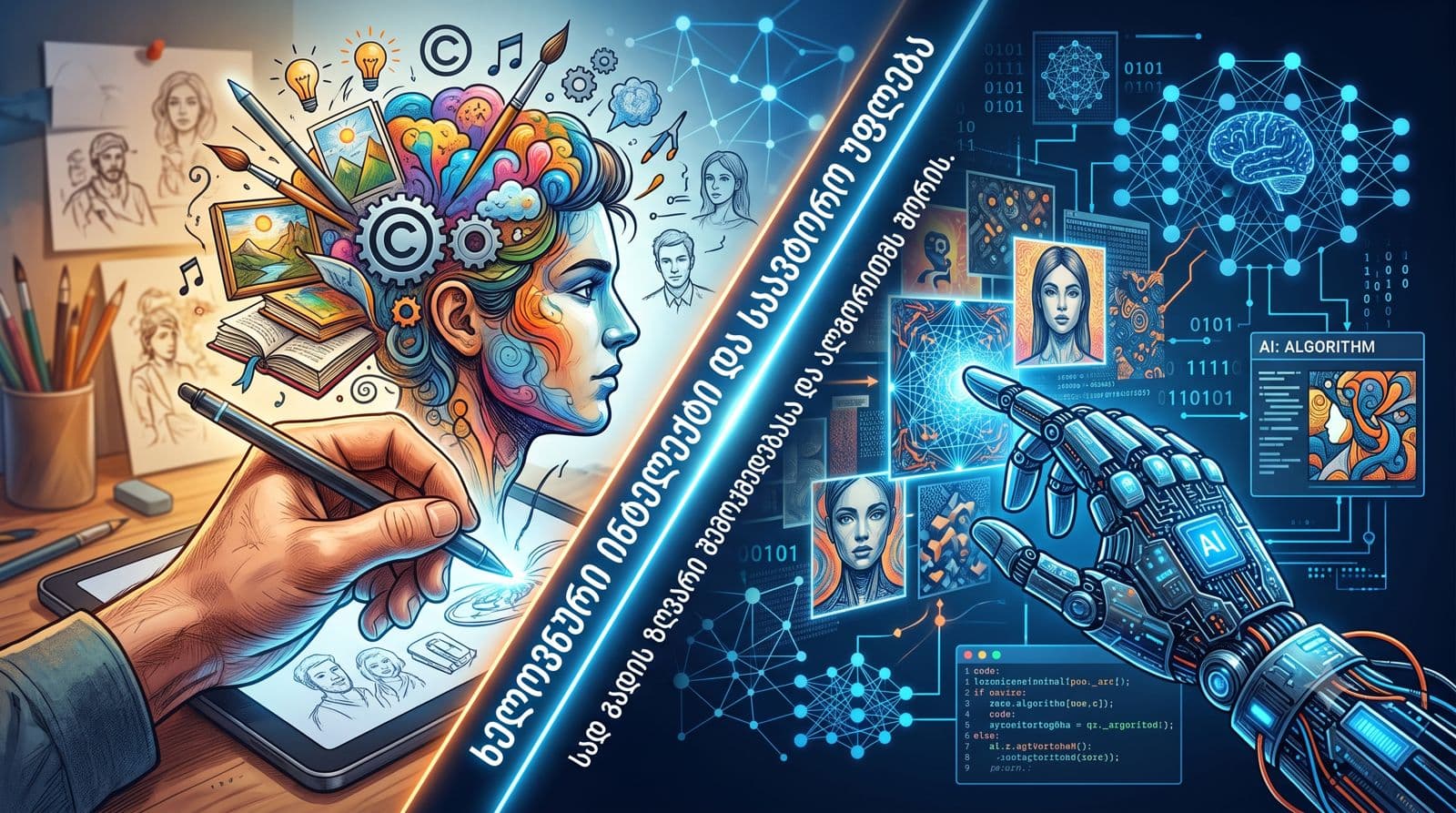
The blog addresses the issue of authorship of a product created by artificial intelligence. What is the line between creativity and the use of algorithms? What should a business consider when creating a product using artificial intelligence?
<h3>Personal Data Protection for Business in Georgia: What Companies Should Consider in 2026</h3> <p>Introduction: What Changed on March 2, 2026? As of March 2, 2026, the Personal Data Protection Service was abolished and its functions - supervision, inspections, incident review, and receipt of statements from subjects - were transferred to the State Audit Service. This change raises open questions. The Personal Data Protection Service was a specialized, separately established institution, while the main mandate of the State Audit Service is control of state finances. The specialized competence and speed of the new structure are still to be tested. Business and the civil sector should closely monitor this development. What has not changed: The requirements of the law - obligations, penalties, and rights of subjects - are in full force. Official contact: State Audit Office - sao.ge</p> <h3>Part I: Who does the law apply to?</h3> <p>The Law “On Personal Data Protection” applies to all persons or organizations that process data on the territory of Georgia using automated or semi-automated means; or are based outside Georgia but process local data using technical means available in Georgia. This means that the law applies to: all companies, institutions where personal data of a person is processed. Video, audio monitoring. Exception: completely personal and family activities of a natural person, which are not related to entrepreneurial or professional activities. In addition, the law does not apply to the processing of personal data of a legal entity. The focus of the law is the personal data of a natural person.</p>
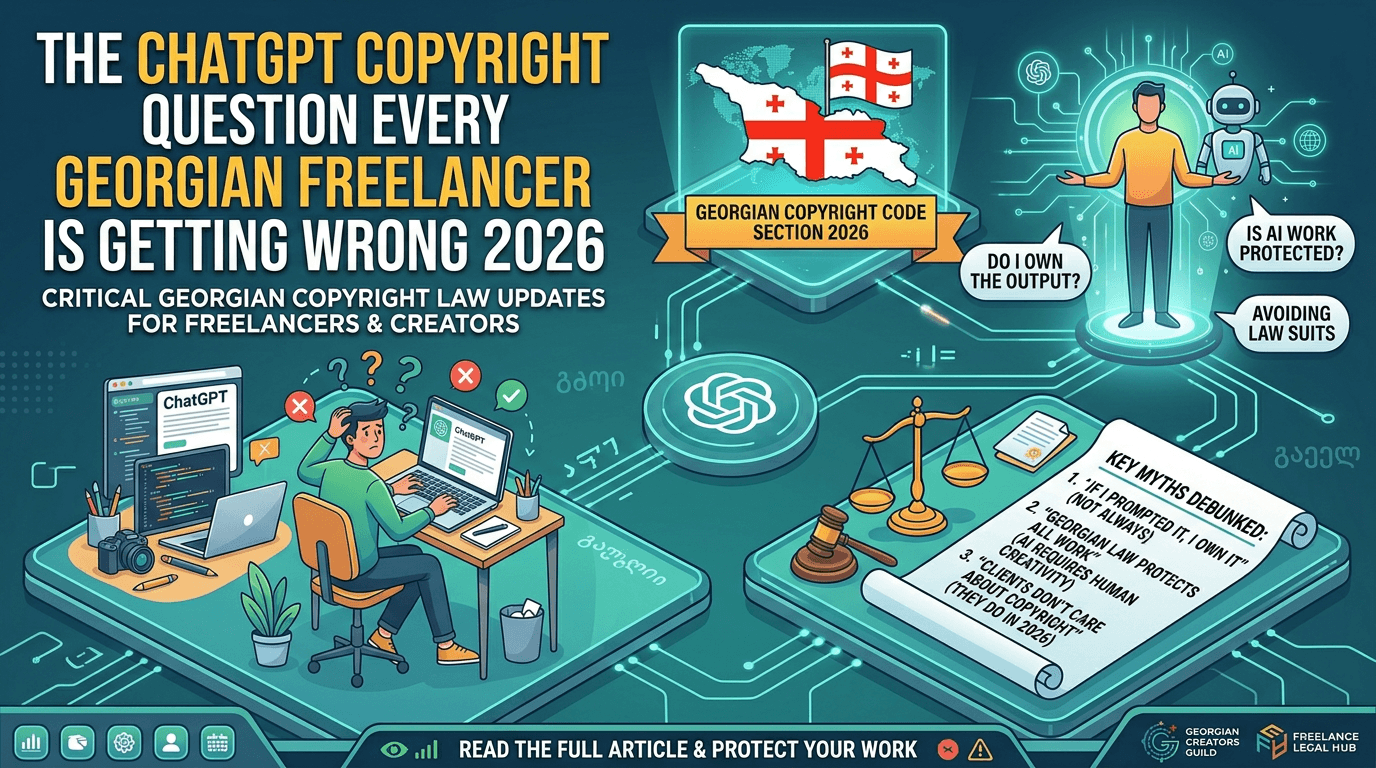
<h2>1. Can AI like ChatGPT be considered the author of a work under Georgian law?</h2> <p>No, according to Georgia's Law on Copyright and Related Rights, copyright belongs only to a natural person (human) whose intellectual-creative activity created the work. AI systems cannot be authors, so AI-generated content lacks automatic copyright protection afforded to human works.</p> <h2>2. Who owns the output generated by ChatGPT, and can I use it commercially?</h2> <p>Per OpenAI's Terms of Use, the generated output belongs to the user (with reservations, like OpenAI's right to use inputs for model improvement). Commercial use is allowed if you comply with platform rules, but legal risks like plagiarism or lack of originality may still apply.</p> <h2>3. What are the key legal risks when using AI-generated content?</h2> <p>Main risks include lack of originality leading to plagiarism or copyright infringement (if based on protected works), potential authorship disputes from clients, and evolving international practices (e.g., US Copyright Office requires significant human contribution for protection). Each work needs individual analysis.</p>
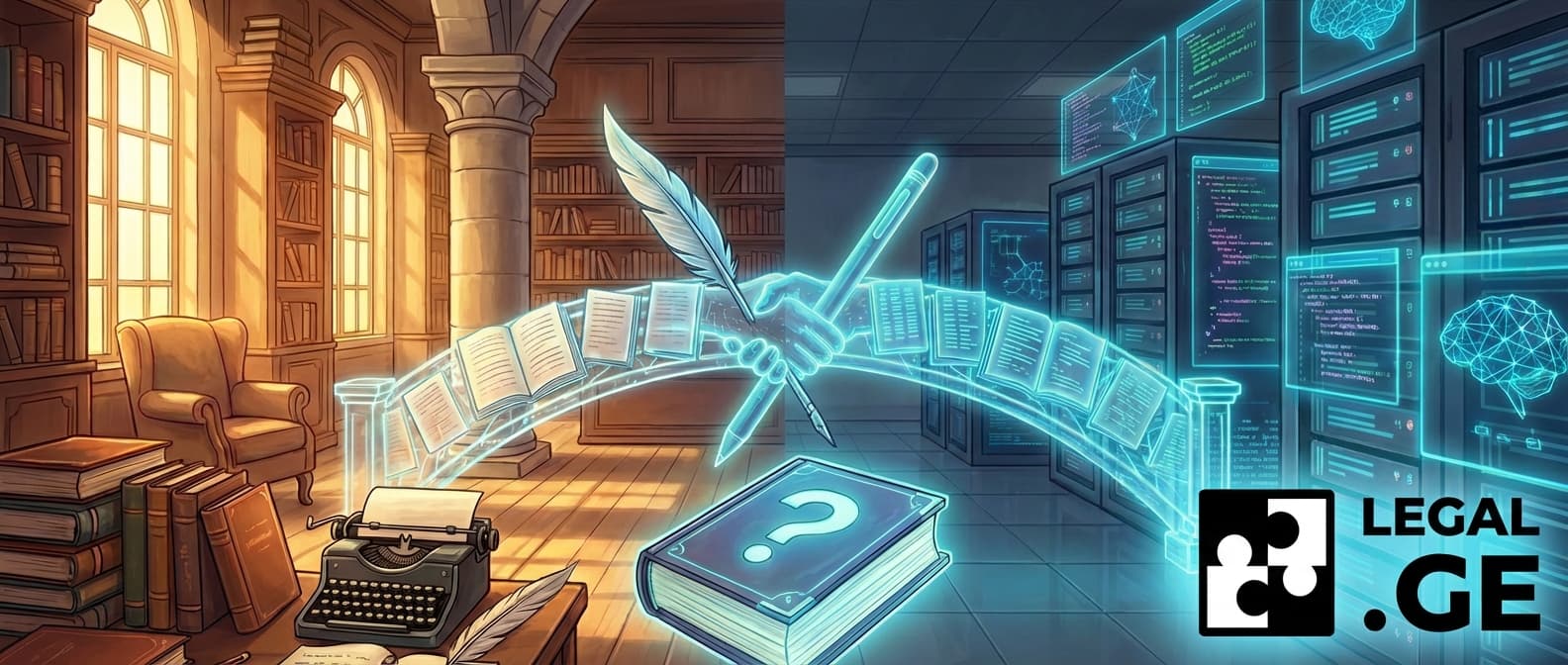
The involvement of Artificial Intelligence (AI) can transcend the outcomes predetermined by a user; consequently, AI itself could be perceived as an author, given that modern AI possesses the capability to create works without human intervention. This theory is quite provocative, as it directly contradicts the standard definition of authorship, according to which an author is a natural person through whose intellectual-creative activity a work is produced. It is important to note that the primary-and perhaps only-advantage of machine authorship is that it aligns with the core logic of intellectual property rights, which dictates that the creator is the author.