In the modern digital economy, the formation of a legal environment is inconceivable without understanding the technological foundations that drive the financial and business sectors. The following legal and technological analysis of key terms will significantly assist technology lawyers now and in the future.
1. Big Data
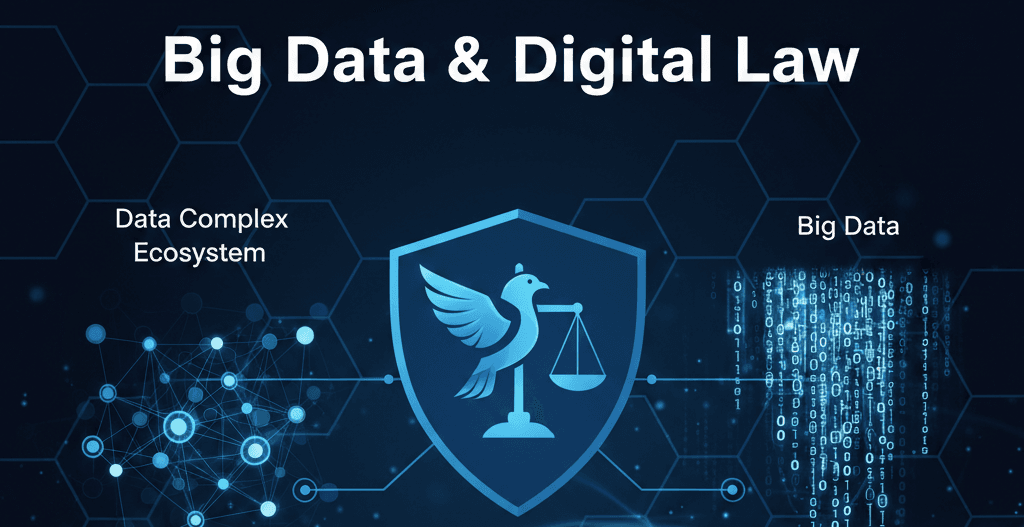
Big Data refers to a substantial volume of heterogeneous and multi-type data, facts, or information in digital form, and unrestricted activity in digital form. It is collected at high velocity from multiple sources and is subject to real-time processing through the application of advanced technologies and analytical algorithms.
Key Characteristics:
Substantial Volume: Involves massive amounts of digital data.
Heterogeneity (Variety): Consists of diverse and varied types of digital information.
High Velocity: Data is collected rapidly and processed in real-time.
Advanced Processing: Requires specialized high-performance computing and analytical algorithms.
Unrestricted Activity: Includes any digital facts or information.
2. Data Complex Ecosystem
Big Data Complex Ecosystem (BDCE) refers to an information technology infrastructure consisting of an integrated set of systems for the collection, storage, and use of data from various sources. The data ecosystem shall include, but is not limited to, data owners, data analytics providers, data professionals, cloud service providers, industry stakeholders, academic institutions, and research organizations. It further comprises programming languages, software libraries, and algorithms, forming a unified infrastructure for the collection, storage, analysis, and application of data.
Participants: The ecosystem integrates data owners, data analytics providers, data professionals, cloud service providers, industry stakeholders, universities, and research organizations.
Instruments: It provides the common infrastructure required for the analysis and application of data.
3. Data Architecture
Data Architecture is a component and a part of the data complex ecosystem and defines how data shall be processed, stored, integrated, and utilized within an organization for its operational and business purposes.
Data architecture encompasses data models, structures, and types; data governance (including lifecycle management); big data analytics; big data infrastructure (including data acquisition, support by high-performance computing technologies, and processing) and data security.
Data architecture ensures the management of data from its collection, through transformation and distribution, to its final consumption. It constitutes a conceptual model that defines the structure and behavior of systems for the acquisition, processing, and analysis of big data, which exceeds the capacity of traditional data processing systems.
Function: It ensures the management of data from its collection and transformation to its distribution and final consumption.
Scope: It encompasses data models, structures, types, data governance (including lifecycle management), big data analytics, infrastructure (acquisition and processing), and data security.
Conceptual Model: It defines the structure and behavior of systems designed for data sets that exceed the capacity of traditional processing systems.
4. FinTech and Personal Data
Modern Financial Technology (FinTech) is directly linked to new data processing standards:
FinTech: Refers to advanced digital technologies integrated into the financial sector, based on Big Data, Artificial Intelligence (AI), cloud infrastructure, and Distributed Ledger Technologies (DLT). It creates the technological foundation for platform-based service delivery.
Big Personal Data: Refers to personal data generated or processed as a result of the Big Data complex ecosystem.
Conclusion
The legal regulation of the digital economy requires in-depth knowledge of data ecosystems and architecture, as these technological models determine both business conduct and the quality of consumer rights protection.