

LegalGE
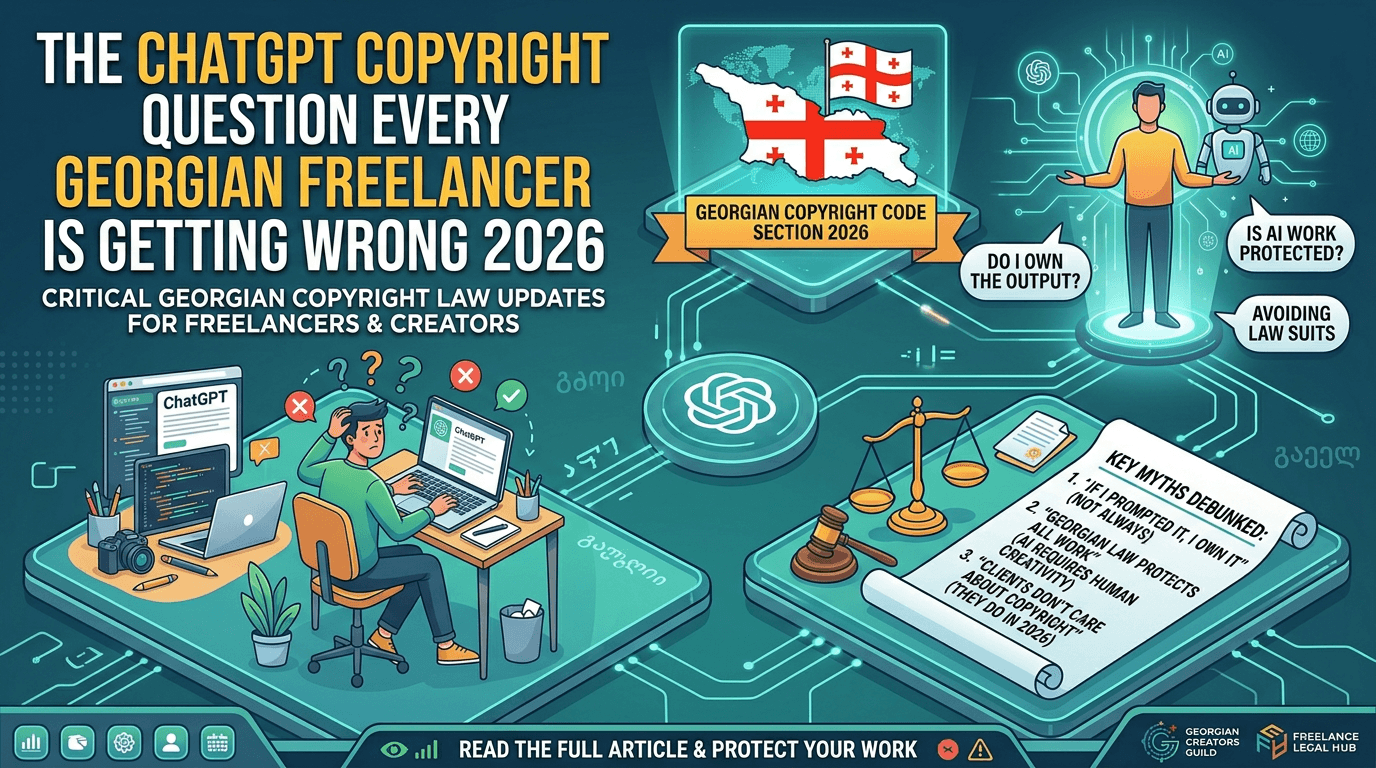
<h2>1. Can AI like ChatGPT be considered the author of a work under Georgian law?</h2> <p>No, according to Georgia's Law on Copyright and Related Rights, copyright belongs only to a natural person (human) whose intellectual-creative activity created the work. AI systems cannot be authors, so AI-generated content lacks automatic copyright protection afforded to human works.</p> <h2>2. Who owns the output generated by ChatGPT, and can I use it commercially?</h2> <p>Per OpenAI's Terms of Use, the generated output belongs to the user (with reservations, like OpenAI's right to use inputs for model improvement). Commercial use is allowed if you comply with platform rules, but legal risks like plagiarism or lack of originality may still apply.</p> <h2>3. What are the key legal risks when using AI-generated content?</h2> <p>Main risks include lack of originality leading to plagiarism or copyright infringement (if based on protected works), potential authorship disputes from clients, and evolving international practices (e.g., US Copyright Office requires significant human contribution for protection). Each work needs individual analysis.</p>
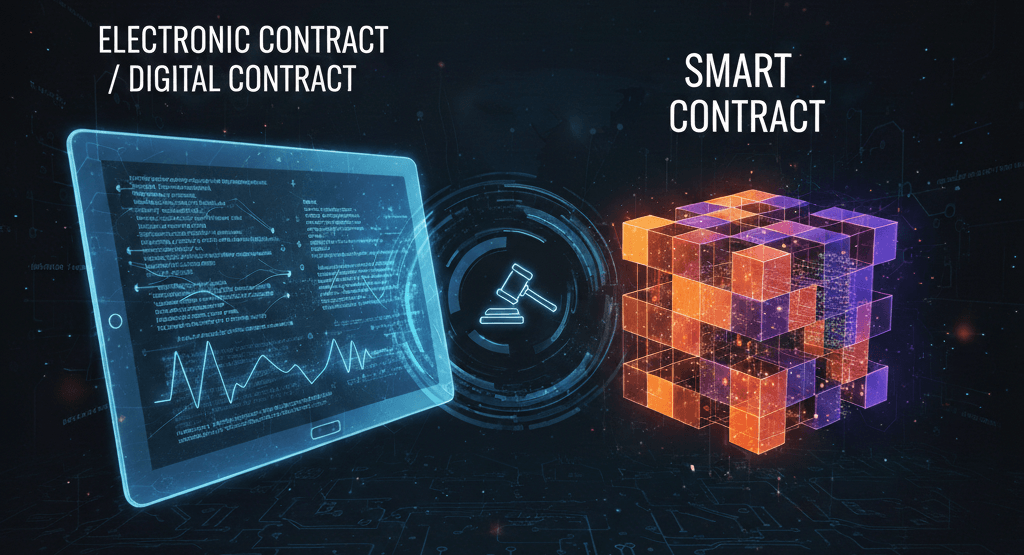
Digital contracts and smart contracts intersect across the following dimensions: Taxonomic Classification: A smart contract is categorized as a subset of an electronic contract. It functions similarly to a traditional agreement, though executed in a comprehensively digitized format. Legal Nature: Smart contracts, analogous to other digital contracts, are encompassed within the legal definition of an electronic document. For a smart contract to constitute a legally binding agreement, it must fulfill the fundamental prerequisites of contract formation and validity (e.g., mutual consent of the parties and adequate terms)—requirements that programming code alone cannot substitute. Functional Overlap: Within the processes of concluding and executing a digital contract, a smart contract may be implemented as a technological utility (for example, as an automated payment mechanism for recurring transactions).

The involvement of Artificial Intelligence (AI) can transcend the outcomes predetermined by a user; consequently, AI itself could be perceived as an author, given that modern AI possesses the capability to create works without human intervention. This theory is quite provocative, as it directly contradicts the standard definition of authorship, according to which an author is a natural person through whose intellectual-creative activity a work is produced. It is important to note that the primary-and perhaps only-advantage of machine authorship is that it aligns with the core logic of intellectual property rights, which dictates that the creator is the author.